How We Make 3D Printed Replacement Car Parts
Every project follows the same four-step path, whether it’s a discontinued trim clip or a custom-made bezel.

Scanning
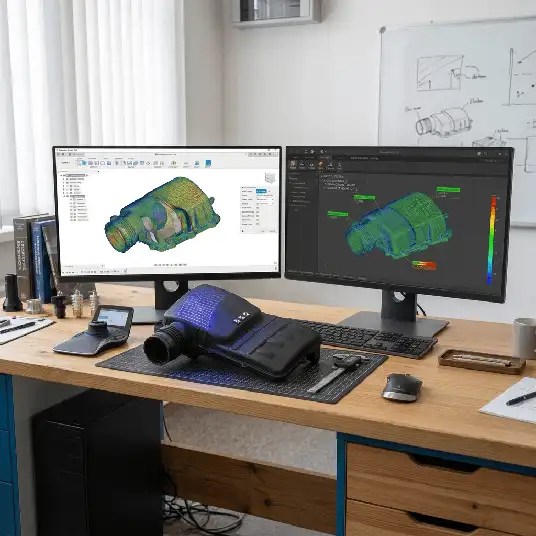
High-resolution Metro Y Ultra CMM Edition captures the original parts’ exact geometry, down to fine surface detail.
Modeling
Parametric CAD reconstruction, feature-based modeling, and design optimization to match OEM specifications or improve manufacturability are done with the latest state-of-the-art CAD software.

Printing
Produced in a Bambulabs H2C printer using ABS, ASA and carbon fiber reinforced materials, checked against the original with a tolerance of ±.002″ for OEM fit.

Verify
We check every dimension against the original part before it leaves the shop, guaranteeing a fit that’s right the first time.
Our Commitment
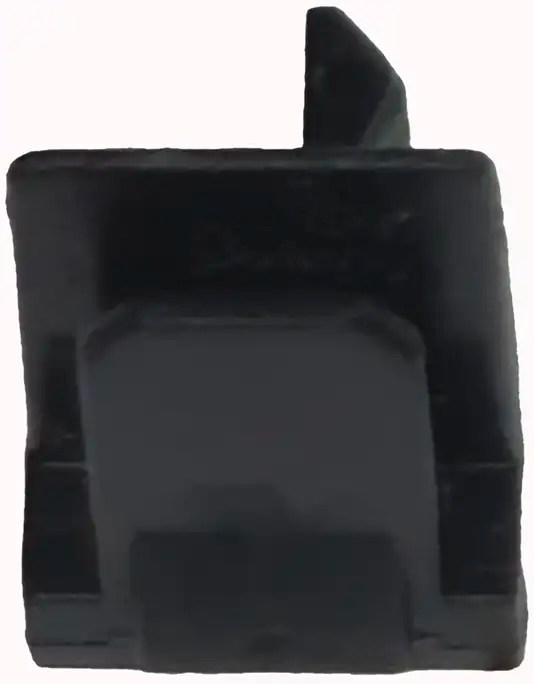
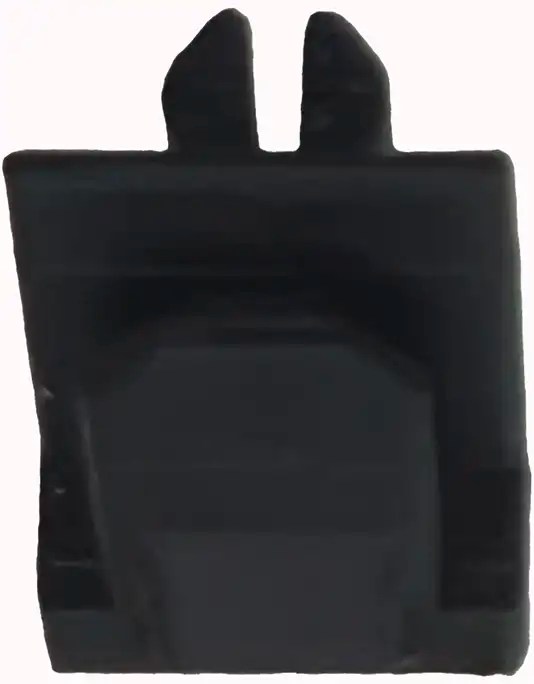
Verified before it ships
We don’t guess and hope it fits. Every part is measured against the original before delivery — and if it’s off, we correct it before you ever see it.


Why Kalibrate 3D
| Kalibrate 3D | Most shops |
|---|---|
| Six Sigma-trained quality control on every project | No formal quality system behind the scan |
| Direct access to the person doing the work | Routed through an account manager |
| Shop-floor manufacturing background, not just software | Trained on the scanning software only |
| Built around automotive and aerospace tolerances | One workflow for every kind of job |
Contact Kalibrate 3D
Share your project requirements, and we will follow up with timing, feasibility, and recommendations for materials and shipping for your 3D printed replacement car parts.
FAQ
Frequently Asked Questions
General notes on scanning, reverse engineering, and part reproduction.
SHEET 1General
NOTE 01 What does Kalibrate 3D do?
Kalibrate 3D we make 3D printed replacement car parts by provides 3D scanning, reverse engineering, CAD modeling, and 3D printing services, primarily for automotive and aerospace-adjacent clients. We take an existing part — even one that’s damaged, discontinued, or undocumented — and turn it into an accurate digital model or a reproduced physical part.
NOTE 02 What industries and parts do you work on?
Our core focus is cosmetic and non-structural automotive parts — interior trim, exterior badges, bezels, clips, housings, and under-hood components no longer available from the manufacturer. We don’t reproduce structural, load-bearing, or safety-critical parts (braking, steering, suspension, fuel-system, or restraint components). We also take on aerospace-adjacent and general industrial reverse-engineering and prototyping work where precision and documentation matter.
NOTE 03 What quality standards do you follow?
Kalibrate 3D is run with an AS9100 quality background and Six Sigma Black Belt process discipline carried over from aerospace and industrial manufacturing. Every project follows a controlled, documented workflow from scan to finished part, so the geometry you receive matches what was measured.
SHEET 2The Process
NOTE 04 Can you make a part without a CAD file or drawing?
Yes — this is the majority of what we do. If you have the physical part, even a damaged or worn one, we can 3D scan it and reconstruct an accurate CAD model from that data. No original drawing required.
NOTE 05 How accurate is your 3D scanning?
We use professional Revopoint MetroY Ultra CMM Edition scaning equipment capable of capturing fine surface detail, appropriate for precision reproduction and reverse-engineering work. With our equipment, our goal is to achieve no more than 0.002″ deviation from the original part. Achievable accuracy depends on part size, geometry, and surface finish — we’ll flag any limitations before starting a project.
NOTE 06 What materials can parts be printed in?
Parts are currently printed in ABS and ASA, durable engineering-grade plastics well suited to automotive trim, non-structural brackets, and fixtures. Additional materials may be added as the shop grows — ask about your specific application if you’re not sure ABS is the right fit.
NOTE 07 Do I need to ship the part, or can I drop it off?
Either works. Local customers in the Savannah area are welcome to drop parts off, and everyone else can ship the part to us for scanning. We’ll return your original part along with the finished reproduction.
SHEET 3Requesting & Logistics
NOTE 08 How do I request a part?
Fill out the vehicle part request form on our site with your vehicle’s year, make, model, and the part you’re looking for. That submission comes directly to us and starts the quoting process. Get a Quote
NOTE 09 What information do you need from me?
For automotive work, we need the vehicle’s year, make, model, and sub-model, along with a description — and photos, if you have them — of the part you need. The more detail you give us up front, the faster we can scope the project.
NOTE 10 How much does a project cost?
Cost depends on the part’s size, complexity, and the scanning, modeling, and printing time it requires. Every project is quoted individually after we review your part details — submit a request and we’ll follow up with a quote.
NOTE 11 How long does a project take?
Turnaround varies by project scope — some parts move quickly, while more complex reverse-engineering work takes longer to model accurately. We’ll give you a realistic timeline once we’ve scoped your specific part.
NOTE 12 Do you work outside of Savannah/Georgia?
Yes. While we’re based in Savannah, GA, most of our work is done from scanned or shipped parts, so we can take on projects from customers anywhere.
NOTE 13 Do you make structural or safety-critical parts?
No. We reproduce cosmetic and non-structural parts — trim, bezels, housings, low-load brackets, and under-hood components. We don’t take on structural parts or safety-critical systems like braking, steering, suspension, fuel-system, or restraint components.